What Should You Know If You Take Too Much Zinc Supplement?
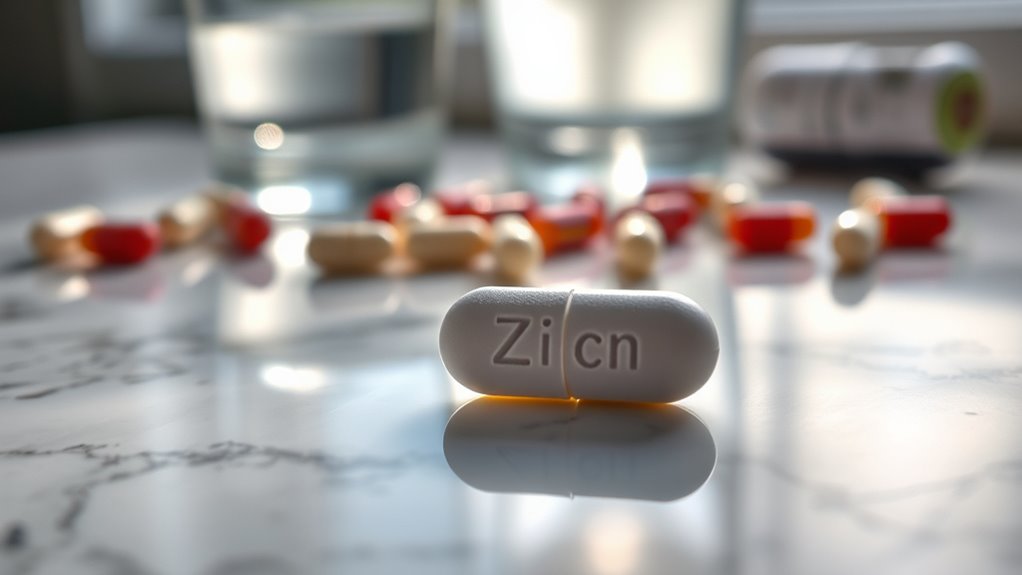
Many people struggle with figuring out the right amount of zinc to take, especially with so many supplements available. It’s easy to worry about taking too much and experiencing side effects.
If you take too much zinc, you might quickly experience nausea, vomiting, stomach cramps, or a metallic taste.
In the long run, excessive zinc can weaken your immune system, cause nutrient deficiencies like copper and iron shortages, and impair wound healing.
To prevent problems, follow recommended doses, avoid large doses at once, and consider eating zinc-rich foods instead of high-dose supplements.
If symptoms persist or worsen, consult a healthcare professional. There’s more to know about staying safe with zinc.
Key Takeaways
- Recognize symptoms like nausea, vomiting, stomach cramps, and dizziness as signs of zinc overdose.
- If you notice these, stop taking zinc supplements right away and drink plenty of water to help flush out the excess.
- Taking too much zinc over a long period can weaken your immune system, cause neurological problems, and lead to deficiencies in copper and iron.
- Be sure not to take high doses without talking to a healthcare professional, and always follow the recommended supplement amounts.
- If your symptoms get worse or don’t go away, contact your doctor promptly for proper testing and treatment.
How Much Zinc Is Safe to Take? Understanding Recommended Limits

Understanding how much zinc is safe to take is important because too much can cause health problems. Knowing your zinc absorption levels and balancing intake through food is key.
The recommended dietary allowance (RDA) for zinc depends on your age and sex, usually around 8 mg for women and 11 mg for men each day. Most people get enough zinc from foods like meat, shellfish, nuts, seeds, dairy, and legumes.
These foods provide zinc in forms that your body can easily absorb. Taking too many zinc supplements over the upper limit of 40 mg per day can interfere with absorbing other essential minerals like copper and iron.
To stay safe, focus on eating zinc-rich foods and avoid high-dose supplements unless your healthcare provider advises otherwise. Monitoring your zinc intake helps prevent potential health issues related to overdose.
What Are the Signs of Zinc Overdose? Recognizing Symptoms Early
If you start feeling queasy, like nausea or you’re throwing up, or maybe you have diarrhea after taking zinc supplements, it could be a sign you’ve had too much. Sometimes, taking too much zinc over a longer period can cause more serious issues, like messing with your immune system or leading to a copper deficiency.
It’s really important to catch these signs early on. If you notice any of these symptoms, it’s a good idea to talk to your healthcare provider. Catching it early can help prevent any lasting problems and ensure you stay healthy.
Common Overdose Symptoms
Zinc overdose can produce a range of symptoms that often appear quickly, making early recognition essential. Common signs include nausea, vomiting, and a metallic taste in your mouth. You might also experience diarrhea, stomach cramps, or headaches.
If you’ve recently taken zinc supplements, especially on an empty stomach or outside typical supplement timing, these symptoms can become more pronounced. Dietary sources of zinc like oysters or red meat rarely cause overdose, but high supplement doses increase the risk.
You may notice fatigue or dizziness as well. Recognizing these symptoms early helps prevent more serious complications. If you notice these signs after taking zinc supplements, stop use and seek medical advice promptly.
Being aware of these overdose symptoms can protect you from potential health risks.
Long-Term Health Risks
While short-term symptoms of zinc overdose tend to appear quickly, prolonged excess intake can lead to serious long-term health issues that may not be immediately obvious. Excessive zinc can interfere with zinc absorption, disrupting your body’s mineral balance.
Over time, this imbalance may cause immune suppression, leading to increased infections or delayed wound healing. Long-term overuse can also impair copper absorption, resulting in neurological problems and anemia.
Moreover, taking high doses of zinc supplements may interact negatively with other medications, reducing their effectiveness or increasing side effects. Recognizing these signs early is vital.
If you experience persistent fatigue, weakness, or neurological changes, consult your healthcare provider to evaluate your zinc intake and prevent further health complications.
Causes of Excess Zinc Intake and How It Happens
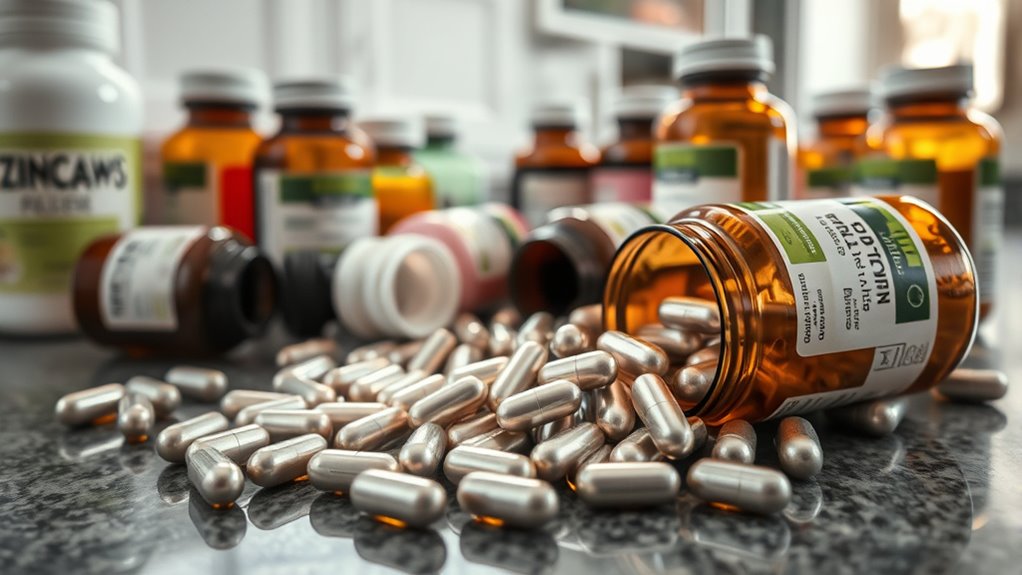
Excess zinc intake often results from taking high-dose supplements or consuming multiple zinc-containing products at the same time. You might unknowingly push your intake too high through common dietary sources like red meats, shellfish, or fortified foods.
Excess zinc often comes from high-dose supplements and dietary sources like red meat and shellfish.
Plus, supplement interactions can boost zinc absorption, especially when taken with certain medications or other minerals like iron and copper. Be cautious if you’re using multivitamins, herbal remedies, or over-the-counter cold remedies that contain zinc—they can add up quickly.
Here are three common causes of excess zinc intake:
- Relying heavily on zinc supplements without medical advice
- Combining multiple zinc-rich products or supplements
- Overlooking the contribution of dietary sources during supplementation
Understanding how these factors add up helps you avoid unintentional overdose. Being aware of supplement interactions and diet sources helps you stay within safe limits and protect your health.
What Are the Health Risks of Too Much Zinc? Potential Complications
Taking in too much zinc can actually cause some health problems, like upset stomachs or other digestive issues. It might also weaken your immune system, making it harder for your body to fight off illnesses.
Plus, high levels of zinc can lead to a deficiency in copper, which is pretty important for lots of your body’s functions. Knowing about these risks can help you avoid running into trouble from taking too much zinc.
Copper Deficiency Risks
Consuming too much zinc can interfere with your body’s ability to absorb copper, leading to a deficiency. Copper deficiency can cause serious health issues and worsen your mineral imbalance. When zinc levels are too high, your body struggles to maintain proper copper levels, which are essential for your immune system, energy production, and nerve function.
Be aware of these risks:
- Weak immune response – making you more vulnerable to infections.
- Fatigue and weakness – reducing your energy and daily functioning.
- Neurological problems – such as numbness or tingling sensations.
This mineral imbalance can develop silently but has long-term consequences if left unchecked. Protect your health by monitoring zinc intake and making sure you get enough copper.
Gastrointestinal Distress
While zinc is essential for your health, taking too much can cause uncomfortable gastrointestinal issues. Excess zinc can irritate your stomach, leading to nausea, vomiting, and diarrhea.
These symptoms happen because high zinc levels interfere with how your body absorbs nutrients and can upset your digestive system’s balance. Taking zinc supplements with other medications may also cause interactions that make gastrointestinal distress worse.
For example, zinc can reduce the absorption of antibiotics or other mineral supplements, further disrupting your digestion. If you notice persistent stomach upset after taking zinc, it may mean you’ve exceeded safe levels.
Reducing your dose or spacing out your supplement intake can help minimize these issues and support better overall tolerance.
Immune System Impact
Excess zinc can actually impair your immune system’s ability to function properly, despite its reputation for boosting immunity. Too much zinc disrupts how your body absorbs zinc and messes with immune regulation, making you more vulnerable to infections. When your zinc levels are high, your body may struggle to produce the right immune responses.
Be aware of these potential risks:
- Reduced ability to fight off colds and other illnesses.
- Increased susceptibility to infections due to impaired immune modulation.
- Long-term immune suppression, which can lead to chronic health issues.
Overdoing zinc supplements can cause your immune system to become overwhelmed or underperform, leaving you vulnerable. Keeping zinc levels balanced is essential for a strong, effective immune response.
How Zinc Overdose Affects Your Body and Nutrients
Zinc overdose can significantly disrupt your body’s delicate nutrient balance, leading to various health problems. When you take too much zinc, it can hinder your body’s ability to absorb zinc properly.
Excess zinc disrupts nutrient balance, impairing absorption and causing health issues.
This usually happens because excess zinc competes with other essential minerals like copper and iron for absorption. As a result, your levels of these nutrients may decrease, causing deficiencies that affect many bodily functions.
For example, a copper deficiency can weaken your immune system and cause neurological issues. Iron deficiency might lead to fatigue and anemia.
High zinc levels can also cause gastrointestinal symptoms like nausea, vomiting, and diarrhea. Over time, these imbalances can weaken your immune response and slow tissue repair.
To stay healthy, it’s important to keep zinc intake in check and be aware of how excess zinc can negatively impact your overall nutrient levels and well-being.
What Should You Do If You Suspect Zinc Toxicity? Action Steps

If you notice symptoms like nausea, vomiting, diarrhea, or fatigue after taking zinc supplements, it might be zinc toxicity. First, stop taking zinc immediately and avoid more supplements.
Next, stay hydrated to help your body flush out excess zinc and support zinc absorption regulation. Finally, contact your healthcare provider promptly for guidance—especially if symptoms worsen or stick around.
Here are your action steps:
- Cease zinc supplements to prevent more overdose and give your body a chance to recover.
- Adjust your supplement timing in the future to minimize zinc absorption issues and avoid high doses all at once.
- Seek medical advice if your symptoms worsen or if you need further testing or treatment.
Tips to Avoid Zinc Overdose When Supplementing
To prevent zinc overdose when supplementing, follow recommended dosage guidelines and avoid taking large doses all at once. Consuming zinc through foods like meat, shellfish, nuts, and seeds helps keep levels steady without risking overdose.
Pay attention to supplement timing. Taking zinc with meals can improve absorption and reduce stomach upset. Spread your doses evenly throughout the day instead of taking a single large dose, which can overload your system.
Use the table below to see how timing and sources impact zinc intake:
| Dietary Sources | Supplement Timing | Risk of Overdose |
|---|---|---|
| Meat, Shellfish | With meals | Lower risk |
| Nuts, Seeds | Spread throughout the day | Minimized risk |
| Fortified foods | Avoid large doses at once | Reduced risk |
Following these tips helps you stay within safe limits and reduces the risk of overdose.
Who Is Most at Risk of Zinc Overdose? Identifying Vulnerable Groups
Certain groups of people are more vulnerable to zinc overdose because of their health conditions, dietary habits, or medications. If your zinc absorption is affected or you take supplements at the wrong times, your risk goes up.
Be especially cautious if you:
- Have a medical condition like gastrointestinal disorders that affect zinc absorption. This can lead to unintentional overdose if you supplement improperly.
- Take medications such as antibiotics or diuretics that interfere with zinc. If you don’t manage supplement timing carefully, you could risk dangerous levels.
- Rely on high-dose supplements regularly, thinking more is better. This can quickly lead to toxicity.
Understanding how your body absorbs zinc and coordinating supplement timing are important. These factors can make you more prone to overdose, so stay alert and talk to your healthcare provider to keep your zinc intake safe.
How to Balance Zinc Intake for Optimal Health and Safety
Balancing zinc intake is key to staying healthy while avoiding overdose risks. Focus on eating foods like meat, shellfish, dairy, nuts, and seeds, which naturally contain zinc.
Keep in mind that factors like phytates in grains can reduce how much zinc your body absorbs, while animal proteins tend to boost absorption.
| Dietary Sources | Absorption Factors |
|---|---|
| Meat, shellfish | Animal proteins increase absorption |
| Nuts, seeds | Phytates decrease absorption |
| Dairy products | Calcium may compete for absorption |
To get the right amount, aim for a varied diet that includes these sources. Watch portion sizes and avoid taking too many supplements unless your doctor recommends it.
Balancing zinc properly supports your immune system, helps with wound healing, and keeps you generally healthy—without the risk of taking too much.
When Should You Talk to a Healthcare Professional About Zinc?
You should consider consulting a healthcare professional if you notice symptoms like nausea, diarrhea, or a metallic taste after taking zinc supplements, as these can indicate overdose. These signs aren’t just uncomfortable; they could also signal dangerous levels of zinc in your body.
It’s especially important if you’ve been relying on dietary sources or taking multiple supplements, which can increase the risk of overdose.
Seek professional advice if:
- You experience persistent gastrointestinal issues despite adjusting your diet and supplement routine.
- You notice changes in taste or unusual symptoms after mixing zinc with other supplements or medications.
- You suspect your zinc intake is too high, especially if you’ve been taking doses beyond recommended levels.
A healthcare provider can evaluate supplement interactions and help you find a safe, balanced approach to zinc. This way, you can keep your health protected and avoid potential complications.
Frequently Asked Questions
Can Zinc Overdose Cause Long-Term Health Issues?
Yes, a zinc overdose can cause long-term health issues. Too much zinc can interfere with how your body absorbs zinc itself and can disrupt how minerals like copper and iron interact.
Over time, this imbalance might lead to problems like neurological issues, a suppressed immune system, or anemia. It’s really important to stick to the recommended doses because taking too much can harm your health and cause ongoing problems related to mineral imbalances and body functions.
Does Taking Zinc With Other Supplements Increase Overdose Risk?
Taking zinc with other supplements can increase the risk of overdose because of how they interact and the dosage warnings.
If you combine zinc with high doses of copper, iron, or calcium, it can interfere with absorption and raise the chances of toxicity.
Always check the label for dosage warnings and talk to a healthcare professional before mixing supplements.
This helps prevent unintentional overdose and ensures that all your supplements are safe and effective.
Are Children More Susceptible to Zinc Toxicity?
Yes, children are more susceptible to zinc toxicity because of their vulnerability and smaller body size.
If they ingest too much zinc, you might notice symptoms like nausea, vomiting, stomach cramps, and diarrhea.
It’s important to keep zinc supplements out of their reach and closely monitor their intake.
If you suspect an overdose, seek medical attention promptly to prevent serious health issues.
How Quickly Do Zinc Overdose Symptoms Typically Appear?
When you take too much zinc, toxicity symptoms can show up surprisingly fast, often within hours. It’s because excess zinc can interfere with your body’s zinc absorption, leading to symptoms like nausea, stomach pain, and headaches.
The quicker you notice these signs, the sooner you should seek medical care. Ignoring early cues might prolong discomfort, so stay alert to any unusual feelings after taking high doses of zinc.
Can Dietary Sources of Zinc Lead to Overdose?
Dietary sources of zinc rarely lead to overdose because your body regulates zinc absorption well, preventing excessive buildup. If you eat a balanced diet, your zinc intake usually stays within safe limits.
However, consistently eating large amounts of zinc-rich foods or taking supplements can upset your dietary balance and increase the risk of toxicity. It’s important to keep track of your intake and talk to a healthcare professional if you’re worried about your zinc levels, especially if you’re taking high doses of supplements.
Conclusion
Think of your body as a delicate garden, where zinc is an essential but fragile flower. Too much zinc supplement can upset the balance and cause problems.
Just like over-fertilizing your garden, taking too much zinc can lead to health issues. It might cause nausea, a weakened immune system, or even interfere with the absorption of other minerals.
To keep your health thriving, stick within recommended zinc limits. Watch for signs of imbalance, like stomach upset or fatigue.
If you’re unsure or experience symptoms, talk to a healthcare professional. They can help you find the right amount of zinc supplement.
Remember, taking too much zinc can do more harm than good. Nurture your health wisely, and your well-being will bloom beautifully.