

7 Essential Exercises for a Female Beginner Workout Plan
Starting a fitness journey can feel overwhelming, especially if you’re not sure where to begin. Many women struggle with knowing which exercises are best for beginners or how to build confidence in their workouts. You’re not alone—getting started is often the hardest part, but a simple, guided plan can make all the difference.
Start your fitness journey with these 7 essential exercises designed for female beginners.
Warm up with dynamic stretches to prevent injury, then build lower body strength using bodyweight squats and glute bridges.
Strengthen your upper body with modified push-ups and dumbbell rows, while planks boost core stability.
Add simple cardio moves like jumping jacks to increase endurance and energy.
Focus on proper form and gradual progress, and you’ll be ready to investigate how each exercise benefits your overall fitness.
Key Takeaways
- Start your workouts with dynamic warm-ups like leg swings and hip circles. They help prepare your muscles and reduce the risk of injury.
- Include lower body exercises like bodyweight squats and glute bridges. These will help you build strength and improve hip mobility.
- Practice modified push-ups and dumbbell rows to develop upper body strength. Focus on proper form and controlled movements for the best results.
- Do planks to boost core stability. As you get stronger, try to hold them longer to improve endurance and flexibility.
- Add simple cardio moves like jumping jacks and high knees to keep your heart rate up. Mix in interval training for a more effective calorie burn.
Warm Up Safely With These Beginner Moves
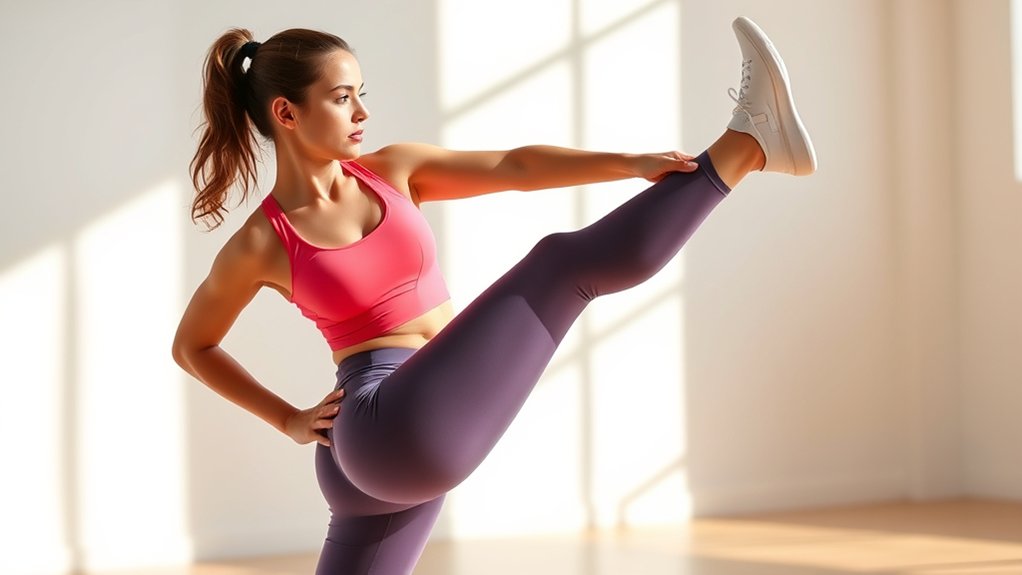
Before diving into any workout, you need to warm up properly to prepare your body and prevent injury. Start with dynamic stretching to get your muscles moving and increase blood flow.
Unlike static stretches, dynamic stretching involves controlled, active movements like leg swings or arm circles that mimic the exercises you’ll do. This approach primes your muscles and joints, making your workout safer and more effective.
Dynamic stretching uses active, controlled movements that prepare your muscles and joints for a safer, more effective workout.
Next, add mobility exercises to improve your range of motion and joint health. Simple moves like hip circles, ankle rolls, or shoulder shrugs help loosen tight areas that might limit your performance.
These exercises also boost your body’s coordination and balance, preparing you for more challenging movements ahead. By committing just five to ten minutes to warming up with dynamic stretching and mobility exercises, you’ll reduce the risk of injury and elevate your overall workout quality from the very start.
Bodyweight Squats To Build Lower Body Strength
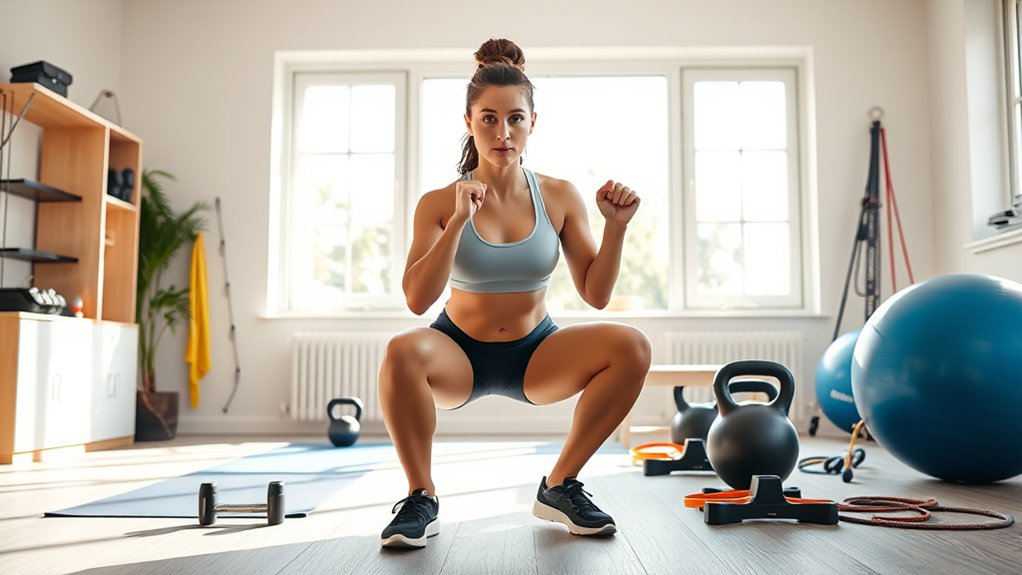
Mastering bodyweight squats is a great way to build lower body strength without any equipment. When you focus on proper form corrections, you protect your knees and back while maximizing results.
Start by standing with your feet shoulder-width apart, then lower your hips as if sitting back into a chair. Keep your chest up and knees aligned over your toes.
To add variety and challenge, try different squat variations like sumo squats or pulse squats, which target muscles slightly differently. Pay close attention to your posture and depth to get the most from each set.
| Squat Variation | Key Benefit |
|---|---|
| Basic Bodyweight | Builds foundational strength |
| Sumo Squat | Targets inner thighs |
| Pulse Squat | Increases muscle endurance |
| Jump Squat | Boosts power and cardio |
These variations and form corrections guarantee a well-rounded, effective lower body workout.
Modified Push-Ups For Upper Body Strength
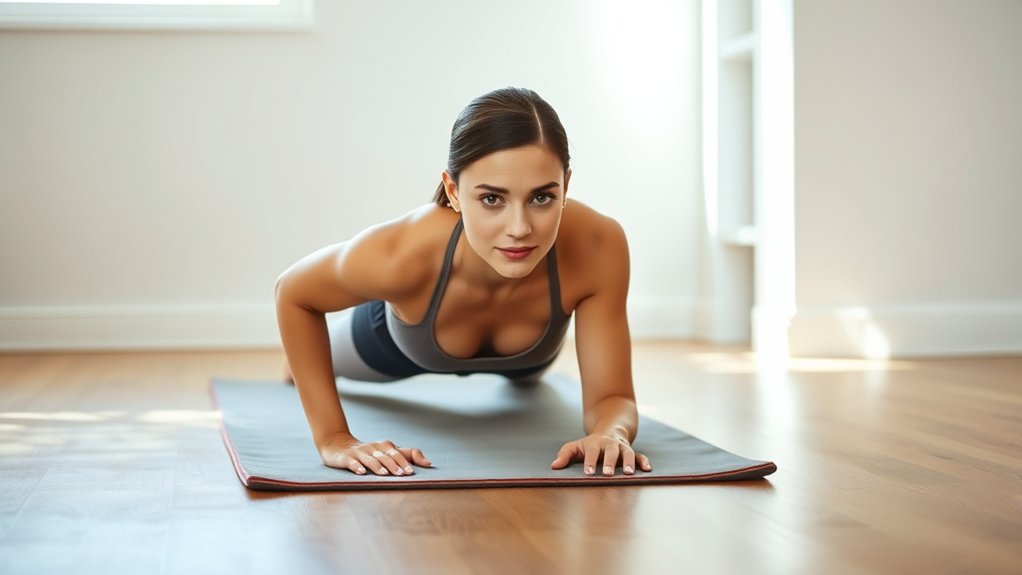
Build upper body strength effectively by incorporating modified push-ups into your routine. These exercises use modified techniques that reduce the load on your arms and shoulders, making them perfect for beginners.
Start by placing your hands on a raised surface like a bench or wall, keeping your body in a straight line. This adjustment helps you maintain proper form while building strength safely.
Begin with hands on a raised surface, maintaining a straight body line to ensure safe, effective strength building.
As you get stronger, gradually decrease the incline or move to knee push-ups, following a clear strength progression. This step-by-step approach challenges your muscles without overwhelming them.
Focus on controlled movements, lowering your chest toward the surface and pushing back up with steady effort. Modified push-ups engage your chest, shoulders, and triceps, enhancing upper body endurance and stability.
Glute Bridges To Activate Your Core And Hips
After strengthening your upper body with modified push-ups, it’s important to engage your core and hips to create balanced stability. Glute bridges are great for this because they focus on activating your glutes and improving hip mobility, which are key for daily movements and progressing in your workouts.
To do a glute bridge:
- Lie on your back with knees bent and feet flat on the floor, about hip-width apart.
- Press through your heels and lift your hips toward the ceiling, squeezing your glutes at the top.
- Hold for a moment, feeling your core engage and your hips open up.
- Slowly lower your hips back down, keeping tension in your muscles.
This move not only strengthens your glutes but also activates your core muscles and boosts hip mobility. Adding glute bridges to your routine helps build a solid foundation for better posture, reduces injury risk, and prepares you for more advanced exercises.
Beginner Planks To Boost Core Stability
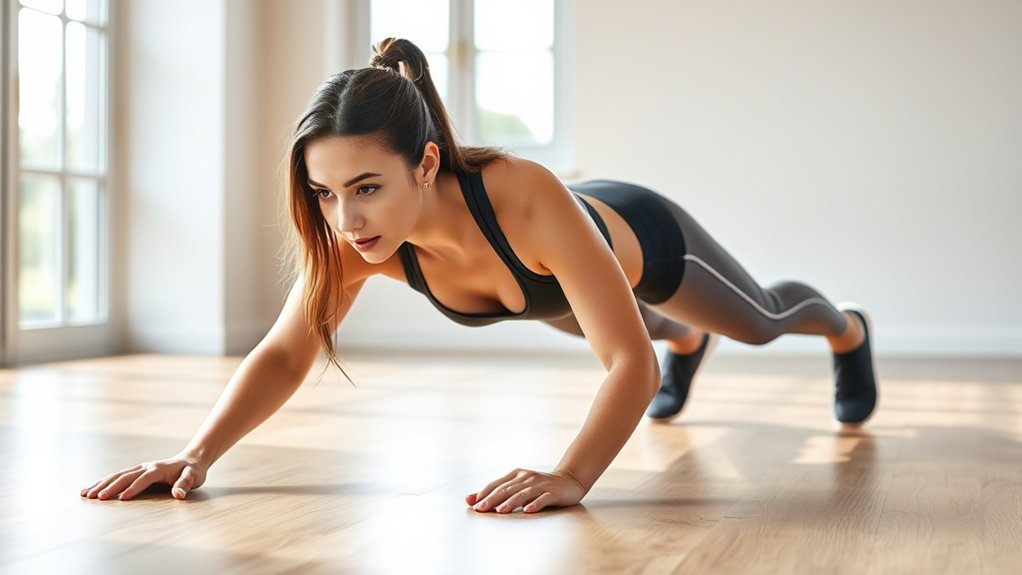
When doing planks, it’s really important to keep your form just right. That way, you’re working your core effectively and avoiding any strain or injury. Make sure to engage those core muscles fully—that’s what gives you that solid stability you’re aiming for.
If you’re just starting out, don’t worry about holding the plank for a long time right away. Begin with shorter holds, maybe 10 to 20 seconds, and then gradually work up to longer periods as you get stronger. Consistency is key, so keep at it, and you’ll see your core improve in no time!
Proper Plank Form
Mastering proper plank form is one of the best ways to boost your core stability from the start. When you focus on correct technique, you get the most out of plank variations without risking injury.
Avoid common mistakes like sagging hips or lifting your butt too high. Keep your body in a straight line from head to heels.
Here’s how to nail your form:
- Position your elbows directly under your shoulders
- Engage your core and glutes for stability
- Keep your neck neutral by looking down at the floor
- Hold the position steadily without shaking or losing alignment
Core Muscle Engagement
Engaging your core muscles properly during beginner planks is key to building stability and strength. When you focus on core activation, you get the most benefits like improved endurance, flexibility, and overall strength. These exercises target multiple muscle groups, helping your core stay stable for daily activities and more advanced routines.
| Core Aspect | Focus Area | Benefit |
|---|---|---|
| Core Activation | Abdominals, obliques | Better muscle engagement |
| Core Endurance | Holding plank pose | Longer-lasting stability |
| Core Flexibility | Controlled movements | Greater range of motion |
| Core Strength | Whole core | Improved support and balance |
Add these principles to your core workouts to see steady progress and build a solid foundation for your fitness journey.
Plank Duration Tips
Building on the importance of core engagement, knowing how long to hold your plank can really boost your progress. Start with shorter durations and gradually add time as your strength grows. Remember, quality over quantity—maintain proper form to get the most benefits and avoid injury.
Mixing up plank variations keeps your routine interesting and works different muscle groups. Try these tips to boost your plank duration effectively:
Begin with 15-20 seconds and add 5 seconds each session. Focus on steady breathing to stay stable. Incorporate side planks and forearm planks for variety. Rest briefly between sets to prevent fatigue.
Dumbbell Rows To Tone Back And Arms (Beginner-Friendly)
When doing dumbbell rows, it’s really important to keep your back flat and your core tight. That way, you’re protecting your form and making sure you get the most out of the exercise. It’s a simple move that’s great for building strength in your back and toning your arms, especially if you’re just starting out.
If you stick with it and practice regularly, you’ll start to see some pretty awesome results. Your posture will improve, and your upper body endurance will get stronger too. It’s a beginner-friendly move that sets a solid foundation for your fitness journey!
Proper Form Techniques
Although dumbbell rows might seem simple, it’s important to keep good form to effectively tone your back and arms and avoid injury. Focus on keeping your posture aligned by keeping your back flat and your core engaged throughout the movement.
Use controlled breathing—exhale as you pull the dumbbell up and inhale as you lower it. Avoid jerky motions to protect your shoulders and get the most out of your muscles.
Remember these tips: Keep your feet shoulder-width apart with knees slightly bent. Hinge at your hips, not your waist. Pull the dumbbell toward your hip, squeezing your shoulder blade. Keep your neck in a neutral position, looking slightly ahead.
Following these tips helps ensure you get a safe and effective workout.
Benefits For Beginners
Dumbbell rows offer several key benefits for beginners looking to tone their back and arms effectively. This exercise strengthens multiple muscle groups at the same time, helping you build balanced upper body strength without too much complexity.
By adding dumbbell rows to your routine, you’ll notice better posture and more defined muscles, which can boost your confidence and keep you motivated. Setting clear, achievable goals with this exercise makes it easier to track your progress and stay committed.
Since dumbbell rows are beginner-friendly, they lower the risk of injury while still challenging your muscles. This makes them perfect for anyone new to strength training, helping you stay focused and motivated as you work toward sculpted arms and a toned back.
Simple Cardio Moves To Increase Endurance And Energy
When starting your fitness journey, adding simple cardio moves can quickly boost your endurance and energy levels. These exercises help improve your heart health and give you a natural energy lift throughout the day.
To get the most out of your routine, try mixing in interval training. This means alternating between high-intensity bursts and recovery periods to maximize calorie burn and build stamina.
Here are four easy cardio moves to get you moving:
- Jumping jacks: A full-body move that quickly raises your heart rate.
- Marching or jogging in place: Great for beginners to build endurance.
- High knees: Engage your core and boost the intensity.
- Step touches: Low-impact and perfect for warming up.
Frequently Asked Questions
How Often Should I Rest Between Workout Days?
You probably think you should skip rest days to get stronger faster, right? Actually, it’s best to rest at least one full day between intense workouts to give your muscles time to recover.
Incorporate active recovery, like light walking or stretching, so you stay moving without overdoing it.
Balancing how often you work out with proper rest helps you avoid burnout and injury.
Listen to your body and give it the downtime it needs to come back stronger.
What Nutrition Supports Muscle Recovery for Beginners?
To support muscle recovery, focus on protein sources like lean meats, eggs, dairy, beans, and nuts. They help repair and build muscle.
Don’t forget how important hydration is. Drinking plenty of water flushes out toxins and helps reduce soreness.
Also, include carbs to replenish energy and healthy fats to help reduce inflammation. Eating balanced meals and staying hydrated will speed up your recovery and keep you energized for your next workout.
Can I Do These Exercises at Home Without Equipment?
Yes, you can definitely do bodyweight workouts at home without any equipment. Many routines rely on just your own body for resistance, so you can get started anywhere.
Exercises like squats, lunges, push-ups, and planks help build strength without needing weights. You don’t need fancy gear to improve your fitness.
These movements are great for beginners and very effective. Just focus on doing them with proper form, stay consistent, and gradually challenge yourself more as you get stronger.
How Do I Track Progress in My Beginner Workout Plan?
You can track your progress like a Renaissance adventurer by using measurements such as reps, sets, and time. Keep a workout journal to jot down what you accomplish each day. It helps you see improvements and stay motivated.
Take photos or note how you feel during workouts too. Over time, your journal becomes a treasure map showing how far you’ve come. It guides you toward your fitness goals with clear, motivating evidence.
Are There Any Common Mistakes to Avoid During These Exercises?
Yes, you should avoid common mistakes like poor posture and rushing through reps.
Focus on form tips such as keeping your back straight and engaging your core to get the most out of each exercise.
Don’t sacrifice technique just to lift heavier weights—that’s a quick way to get injured.
Always warm up properly and pay attention to how your body feels to prevent injuries.
Taking your time and maintaining good form will help you progress safely and confidently.
Conclusion
Now that you’ve planted the seeds with these 7 essential exercises, watch your strength and confidence bloom like a vibrant garden. Each move is a step toward a stronger, healthier you, building muscle, boosting endurance, and igniting energy.
Keep watering your progress with consistency, and soon you’ll feel unstoppable. You’ll shine brightly with every rep, embracing your fitness journey.
Welcome the journey and let your fitness story unfold beautifully, one workout at a time. These exercises are your foundation for a confident and empowered female beginner workout plan.