
How to Safely Take Biotin Without Too Much Supplementation
Many people struggle with finding the right balance when taking biotin to boost hair, skin, and nail health. You’re not alone in feeling overwhelmed by conflicting advice and worried about taking too much.
To safely take biotin without overdoing it, start with a low dose like 5,000 mcg and take it with meals containing healthy fats to boost absorption.
Follow the recommended dosage on labels and avoid doubling up if you miss a dose.
Consult your healthcare provider before increasing your intake, especially if you have allergies or take medications.
For more tips on managing your biotin levels safely, keep exploring these guidelines.
Key Takeaways
- Start with a low dose, like 5,000 mcg, and slowly increase it based on how your body reacts.
- Take biotin with meals that have healthy fats to help your body absorb it better and avoid stomach upset.
- Stick to the recommended doses on the supplement label to prevent taking too much and experiencing side effects.
- Talk to your healthcare provider before raising your dose or combining biotin with other medications.
- Include natural foods like eggs, nuts, and seeds in your diet to support your biotin levels without overdoing supplements.
What Are the Benefits of Biotin for Hair, Skin, and Nails?
Biotin, also known as vitamin B7, plays an essential role in maintaining healthy hair, skin, and nails. When you include biotin in your diet or supplements, you improve biotin absorption, which helps your body utilize this crucial vitamin effectively.
One of the main benefits is hair strengthening; biotin supports the production of keratin, a protein essential for hair structure. As a result, you may notice thicker, shinier hair with less breakage.
Furthermore, biotin promotes healthier skin by improving its elasticity and hydration, reducing dryness and irritation. Your nails also benefit from biotin, becoming stronger and less prone to splitting or cracking.
How Do You Know How Much Biotin You Should Take?
Knowing the right amount of biotin to take helps you maximize its benefits while avoiding potential side effects. To find your ideal dose, consider how your body absorbs biotin. Absorption can vary based on your metabolism, so paying attention to how you feel is important.
Start with a moderate dose, like 5,000 micrograms daily, and see how your body responds. Taking biotin with food can help improve absorption and reduce stomach discomfort. Keep track of any changes in your hair, skin, or nails.
If you notice improvements, stick with your current dose. But if you experience side effects or no change, it’s a good idea to talk to a healthcare professional. They can help you adjust your intake.
How Much Biotin Is Safe to Take Daily?

Although biotin is generally considered safe, taking too much can cause unwanted side effects. The safe daily intake for most adults is around 30 micrograms, but supplements often contain much higher doses, sometimes up to 5,000 micrograms.
Your biotin absorption varies based on factors like your diet and health conditions. High doses usually don’t cause toxicity, but they can interfere with certain lab tests, leading to inaccurate results.
Excessive biotin intake may also interact with medications for epilepsy or acne, reducing their effectiveness. To stay safe, follow the recommended dosage on your supplement label.
If you’re considering higher doses, it’s best to consult your healthcare provider. Remember, more isn’t always better—sticking to the advised amount helps you avoid side effects and keeps your biotin intake safe.
What Are the Risks of Taking Too Much Biotin?
Taking too much biotin can sometimes cause skin breakouts or rashes, which might catch you off guard. It’s not something most people expect when they start supplementing. Plus, high doses of biotin can interfere with certain lab tests, leading to inaccurate results and possibly misdiagnoses. So, it’s good to be aware of these potential risks to keep your health on track and avoid any surprises.
Potential for Skin Breakouts
Excessive biotin intake can lead to unexpected skin breakouts, even if you’re taking it to improve hair and nail health. High doses can overwhelm your body’s natural biotin absorption process, increasing skin sensitivity and triggering breakouts.
You might notice pimples or irritation, especially if your skin is prone to sensitivity. To minimize these risks, consider these tips:
- Stick to recommended doses and avoid megadosing
- Monitor your skin’s response regularly
- Reduce intake if you notice breakouts worsening
- Keep your skin clean and moisturized to help prevent flare-ups
Interference With Lab Tests
High doses of biotin can interfere with certain lab tests, leading to inaccurate results that might affect your diagnosis or treatment plan. This happens because taking too much biotin can disrupt the accuracy of tests measuring hormones, cardiac markers, or vitamin levels.
Excessive biotin absorption may cause false high or low results, which could lead to misdiagnosis or unnecessary treatments. To avoid this, let your healthcare provider know if you’re taking high-dose biotin supplements.
The table below highlights key areas affected by biotin interference:
| Test Type | Effect of Excess Biotin |
|---|---|
| Thyroid tests | False results, misdiagnosis |
| Cardiac markers | Inaccurate readings |
| Hormone levels | Skewed data, incorrect assessment |
Understanding these risks helps you manage supplement intake and ensures reliable lab results.
How to Recognize Signs of Excessive Biotin Intake
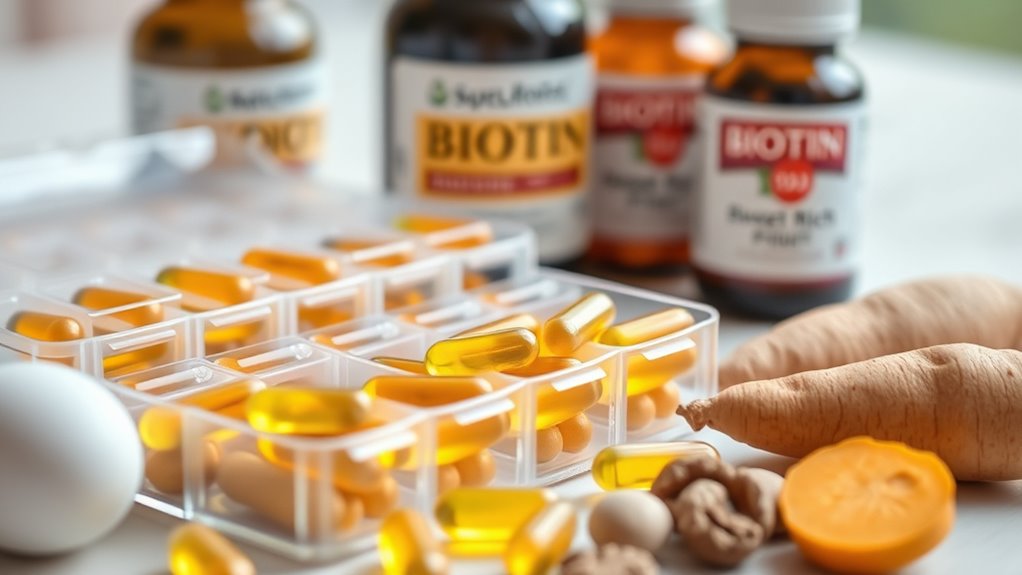
Since biotin is a water-soluble vitamin, you might think excess amounts just get flushed out of your system easily. But taking too much can actually show some signs of excess biotin intake.
Excess biotin can cause symptoms despite being water-soluble and easily flushed out.
You might notice your hair growth slowing down or becoming uneven—that could be a sign of a biotin imbalance. Overdoing it can also cause skin issues like rashes or acne. Some people report stomach problems like nausea or cramps, and others feel tired or get headaches.
To spot these signs, keep an eye out for:
- Unusual hair shedding or thinning
- Skin breakouts or irritation
- Digestive upset or nausea
- Headaches or fatigue
If you notice any of these, it might mean you’re taking too much biotin. Remember, while deficiency can cause hair problems, too much can do the opposite. Monitoring your intake helps keep your levels balanced.
Practical Tips for Safe Biotin Supplementation
To guarantee you’re taking biotin safely, start by consulting with a healthcare professional to determine the right dosage for your needs.
Proper supplement timing can improve biotin absorption. Taking it with food, especially meals containing healthy fats, helps boost absorption efficiency.
Avoid taking biotin on an empty stomach, which might reduce its effectiveness. Stick to a consistent schedule to maintain steady levels in your system.
Be mindful of how much you’re supplementing. Excessive amounts don’t necessarily increase benefits and may cause side effects.
Use a reliable timer or reminder to ensure you take your biotin at the same time daily. This supports better absorption and consistent results.
Also, consider spacing out other supplements or medications that might interfere with biotin absorption, and always follow the recommended dosage instructions.
These practical tips will help you maximize benefits while minimizing risks.
How to Read Supplement Labels and Find the Right Dosage
If you want to use biotin supplements safely, the first thing you should do is learn how to read the labels properly. It might seem a bit confusing at first, but once you get the hang of it, it’s pretty straightforward. Just take a look at the serving size, the amount of active ingredients, and any additional ingredients listed. This way, you can see if what’s inside matches what you actually need.
Getting comfortable with reading labels is super helpful because it allows you to pick the right dosage for your health goals. When you know what’s in the supplement and how much, you can make smarter choices and avoid taking too much or too little. So, spend a little time checking those labels—your body will thank you!
Understanding Supplement Labels
Reading supplement labels carefully is essential for taking biotin safely and effectively. When checking labels, look for the biotin amount per serving to understand absorption potential and avoid excess intake.
Pay attention to the supplement’s storage instructions to keep biotin stable and effective. Knowing how to read labels helps you choose products with the right dosage and quality.
Consider these tips:
- Check the amount of biotin per serving to match your needs
- Read storage instructions to maintain supplement potency
- Look for added ingredients or fillers
- Verify the manufacturing date and expiration to ensure freshness
Understanding these details helps you manage biotin absorption properly and prevents taking more than necessary. Proper label reading supports safe supplementation habits and maximizes benefits.
Determining Appropriate Dosage
Understanding how to determine the right biotin dosage starts with carefully reading supplement labels. Check the label for the recommended daily intake, which guides you on safe consumption levels.
Keep in mind that biotin absorption varies among individuals, so more isn’t always better. Pay attention to supplement timing; taking biotin with meals can improve absorption, while taking it on an empty stomach may reduce effectiveness.
Always start with the lowest effective dose to see how your body responds. If your goals require higher doses, consult a healthcare professional to avoid excessive intake.
Monitoring how your body reacts helps guarantee you’re not overdoing it. Precise label reading, understanding absorption, and timing your intake correctly are key to finding a safe, effective dose.
Who Should Avoid or Be Cautious With Biotin?
Although biotin is generally safe for most people, some individuals should be cautious or avoid taking it altogether. If you have a biotin allergy, taking supplements could trigger an allergic reaction, so it’s best to avoid them.
People on medication need to be especially careful, as biotin can interfere with lab tests and affect how your medications work.
You should also be cautious if you:
- Have a history of allergic reactions to biotin or other supplements
- Are pregnant or breastfeeding and haven’t talked to your healthcare provider
- Take medications like anticonvulsants or antibiotics that might interact with biotin
- Are scheduled for lab tests, since high doses can skew results and lead to misdiagnoses
Always check with your healthcare provider before starting biotin, especially if you fall into any of these categories. This will help ensure safe use and prevent potential issues.
Balancing Biotin Intake With Your Diet and Lifestyle
While it’s important to be cautious with biotin if you have allergies or are on certain medications, finding the right balance with your diet and lifestyle ensures you get its benefits without overdoing it. Your biotin absorption mainly depends on your overall nutritional intake and lifestyle choices.
Eating a balanced diet with foods like eggs, nuts, and seeds can naturally support your biotin levels, reducing the need for supplements. Staying hydrated and managing stress also help your body absorb and use biotin effectively.
Regular physical activity boosts circulation, which can enhance nutrient absorption. Avoiding excessive alcohol and smoking helps keep your biotin levels healthy, as these habits can interfere with absorption.
Common Mistakes When Supplementing With Biotin and How to Avoid Them
Many people make the mistake of taking too much biotin, thinking more will lead to faster or better results. But taking excessive amounts can interfere with absorption and cause unnecessary side effects.
To avoid this, pay attention to when you take biotin. Taking it with meals can help your body absorb it better. Skipping doses or taking it inconsistently can reduce its effectiveness.
Don’t rely only on high doses. A balanced approach is always better. Keep these tips in mind to stay on track:
- Take biotin with food to improve absorption.
- If you forget a dose, don’t double up. Stick to your routine.
- Avoid high doses unless your healthcare provider recommends them.
- Be consistent with your supplement schedule for the best results.
Frequently Asked Questions
Can Biotin Interact With Medications I’M Currently Taking?
Yes, biotin can interact with medications you’re taking, especially with drugs like anticonvulsants and antibiotics.
You should consider dosage considerations because high doses may interfere with lab tests and how well your medications work.
To stay safe, talk to your healthcare provider before starting biotin supplements. They can advise you on possible drug interactions and the right doses, so you don’t accidentally affect your current treatments.
Are There Any Natural Food Sources Rich in Biotin?
You can find biotin in natural food sources like eggs, nuts, seeds, and avocados. Eating these foods helps prevent biotin deficiency and supports proper absorption.
Including a variety of biotin-rich foods in your diet can reduce your need for supplements and ensure your body gets enough of this essential nutrient.
Try to incorporate these options regularly to naturally maintain healthy hair, skin, and nails.
How Long Does It Take to See Results From Biotin Supplements?
You might notice results from biotin supplements within 2 to 3 months, as your body gradually absorbs biotin through proper supplement dosing.
Coincidences happen when your biotin absorption lines up with consistent use, leading to healthier hair and nails.
Keep in mind, responses vary from person to person, and patience is key.
Stick to the recommended doses, and over time, you’ll likely see the improvements you’re hoping for.
Is Biotin Safe for Pregnant or Breastfeeding Women?
Biotin is generally safe for pregnant and breastfeeding women when taken in recommended amounts, but you should always consult your healthcare provider first.
Pregnancy safety and breastfeeding concerns are important, so they can advise you on the right dosage.
While biotin supports healthy hair and nails, excessive intake isn’t necessary and might pose risks.
Stick to recommended doses to guarantee safety for both you and your baby.
Can Children Safely Take Biotin Supplements?
Are you worried about child safety with supplements? Yes, children can safely take biotin, but it’s important to stick to recommended doses.
Always check with a pediatrician before giving biotin or any supplement to your child. Proper dosing helps them get the benefits without risking side effects.
Keep an eye on how much you give, and remember, more isn’t always better. Your child’s health depends on responsible supplement use.
Conclusion
To keep your biotin intake safe, listen to your body’s signals and stick to recommended doses. Think of it like filling a glass: too little offers little benefit, but too much causes overflow and potential issues.
By reading labels carefully and consulting with a healthcare professional, you can make sure you’re nourishing your hair, skin, and nails without risking excess.
Balance is key, so supplement wisely and enjoy that healthy glow. Remember, safe biotin supplementation helps you get the best results without the worry of taking too much.